
Don’t Talk About War
I’m 19 and Doom Grows – as the Soviets Invade Afghanistan

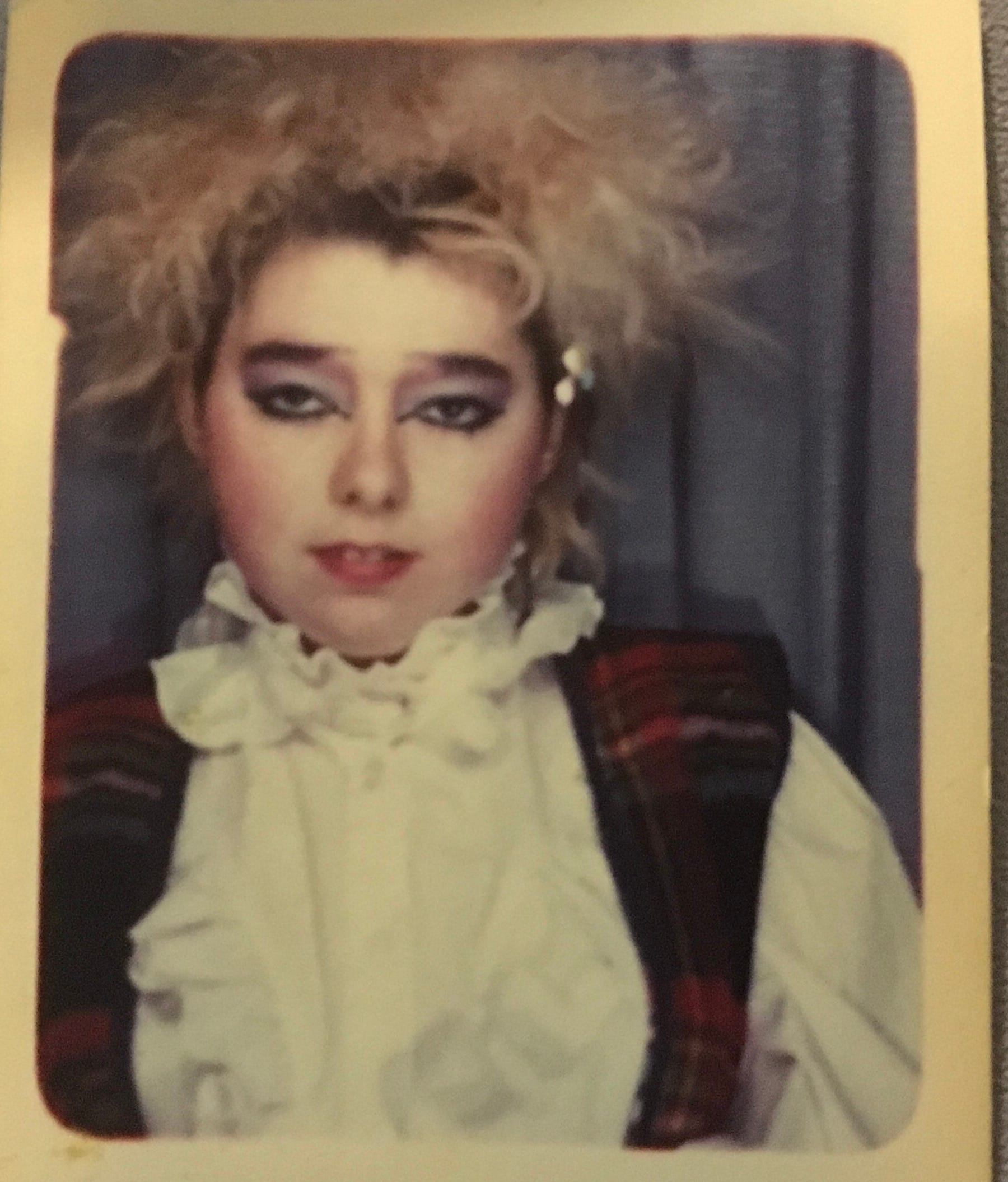
It’s disconcerting right now to read my diary from 1979. An A5-size thing, seven days over two pages. Likely bought cheap, it had an unbecoming matt brown cover, so I stuck on a postcard of a fetching blue bird.
It was the year I turned nineteen, that August. I went through a dreary physiotherapy regime, staying in a specialist hospital for several weeks as Autumn turned the heavy Buckinghamshire beech trees red, their hunched branches resistant to fully shed their leaves until late winter.
It was the year I met my bestest friend ever, Tamsin, who was on the same ward. She was immediately my ‘soul sister’, and for a while life was a sweet ride of new togetherness, shared dreams of exciting futures – could we move to London?! – passions and poetry. For myself, it was a rebirth – a reclamation, even – of my punky roots, as I shyly urged Tamsin to take on punk ethics.
This led to Susie, also on the ward, being told off for playing Ian Dury’s Plaistow Patricia, with its iconic opening ‘arseholes, bastards, fucking cunts and pricks’. There was a delicious defiance of us girls singing it together under our breath. Some days, during the scant visiting slots, my younger brother, Ant, would appear through rain and gales, and sneak in bottles of spirits. Tamsin and me with numb faces, thinking we were so clever in hiding how pissed we were when we could scarcely sit up straight at the dinner table.
Around all this, my diary picks up slowly that there was an international crisis. As the days grew colder, in between watching [frankly dubious] episodes of The Professionals, Blake’s 7 and any other show or movie we could squeeze in, a dread crept around us. One nurse said if they invaded, she would go home to Ireland to be with her family. The ward sister shut us up, saying we would scare the younger girls if we talked about It too much. Christmas was close, after all – we should be cheerful.
And then everyone was whispering about nuclear weapons. I was a member of CND, and I knew that there were so many nuclear bombs that everyone on the planet could be assigned four tonnes’ worth of nuclear material each. The shabby hospital we were in was in the middle of nowhere, in a desolate part of the Home Counties – a rundown establishment built during the First World War.
But I was luckier than Tamsin, because my mum only lived fifteen miles away, while her family were in East London – and London was a target for The Bomb. We whispered about where we’d like to be if the bombs were going to come. I wasn’t sure, but hoped I could see my brother at least.
Some of the girls would listen on small transistor radios late into the night. What were the Soviets doing? Why did they need to invade Afghanistan? Where was Afghanistan? Our government was remote and uncaring, our hatred of Margaret Thatcher already well-formed, since her landslide victory earlier that year. The mutters about imminent nuclear war came like a smothering blanket over any attempts at festive jollity.
None of us really understood the politics of it, and my views were uncomplicated and typical of my age. I dabbled in understanding anarchism. I’d read Karl Marx. Whatever else, none of us could compute the possibility of World War Three because we scarcely understood the seriousness of that situation, or Thatcher beginning her notorious journey as the Iron Lady.
I didn’t write a diary entry for Christmas Day 1979, the day of the invasion. For complicated reasons, I was still in hospital while Tamsin was allowed home. A few days afterwards, I wrote about my brother who came with a cake to see me on Christmas morning – that cheered us both up. Apart from refocusing my punk sensibilities, I was in a phase of ska and two-tone, so that day I wore my black and white, with lashings of eyeliner – naturally – that Tamsin had taught me to apply.
As we played The Specials and more Ian Dury on a portable record player, I coaxed my thoughts to thinking about when I would see Tamsin again, somehow still imagining a future while keeping my dreams tied to the realities of being a disabled girl and what that meant about my personal freedom. The fear of World War Three didn’t stop, but somehow I drew back from it, instinctively looking for corners that offered hope, as most young people need. At this time, mine came in the shape of friendship, as it still does now.
As the world goes through another existential doom shudder, where fear is complicit with hopelessness, there are no easy platitudes to bring yourself tranquillity. There wasn’t then, although I do know that age does bring something – perhaps a simple pragmatism in knowing what’s worth worrying about, and what’s best left alone. Knowing what we can change. Knowing where our quiet voice will be heard. And that, even if it’s just a whisper, it’s a thing worth saying.
Keep well, dear friends during these troubling times. Distraction through nature is a good technique, I find. I can see the sparrows now, on my feeders, and that teaches me something…
With love and solidarity,
Penny
As always, I value your support, with a special thank you to my paid subscribers. Times are hard, and if you can afford to make the odd donation, as if kindly buying me a coffee, it would be much appreciated. I give my thanks, too, if you could share my Substack to encourage more paid subscribers. It really does help.
Love this Pen. Punk, politics and teenage angst. I have vivid memories of that time and your writing captures it beautifully. X